Image 1 of 6
Image 2 of 6
Image 3 of 6
Image 4 of 6
Image 5 of 6
Image 6 of 6
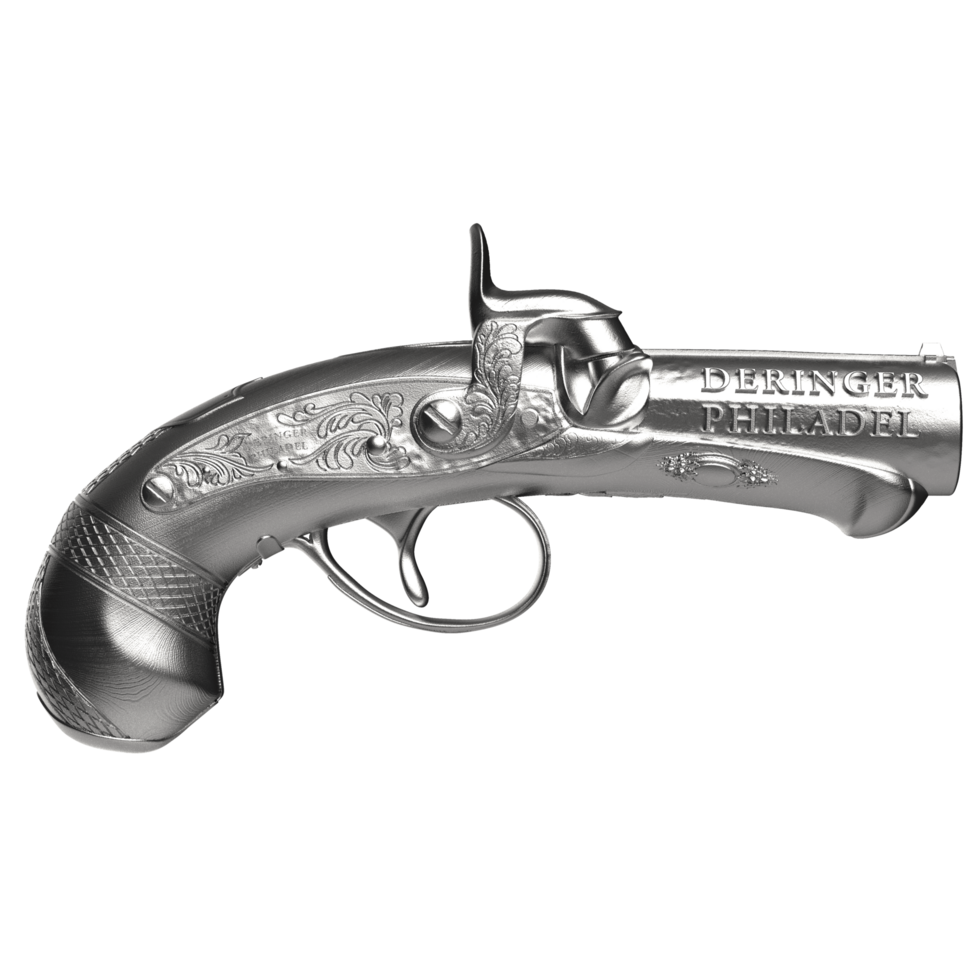
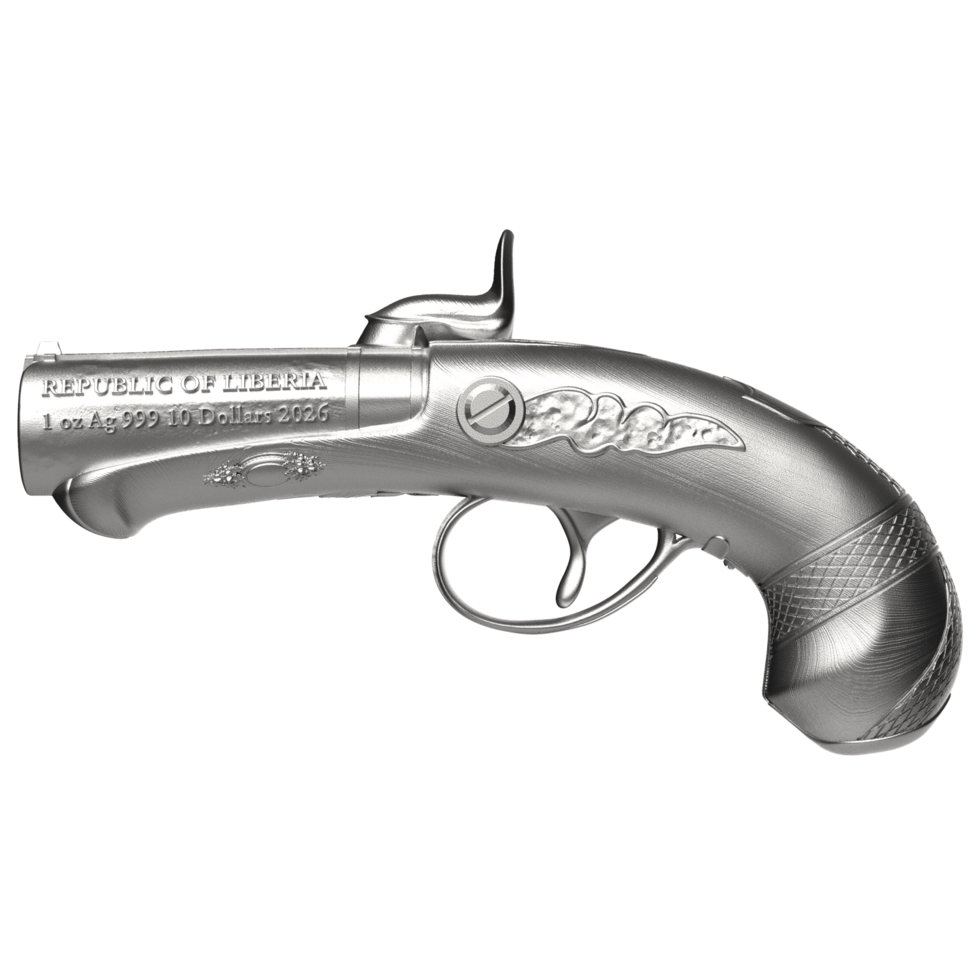
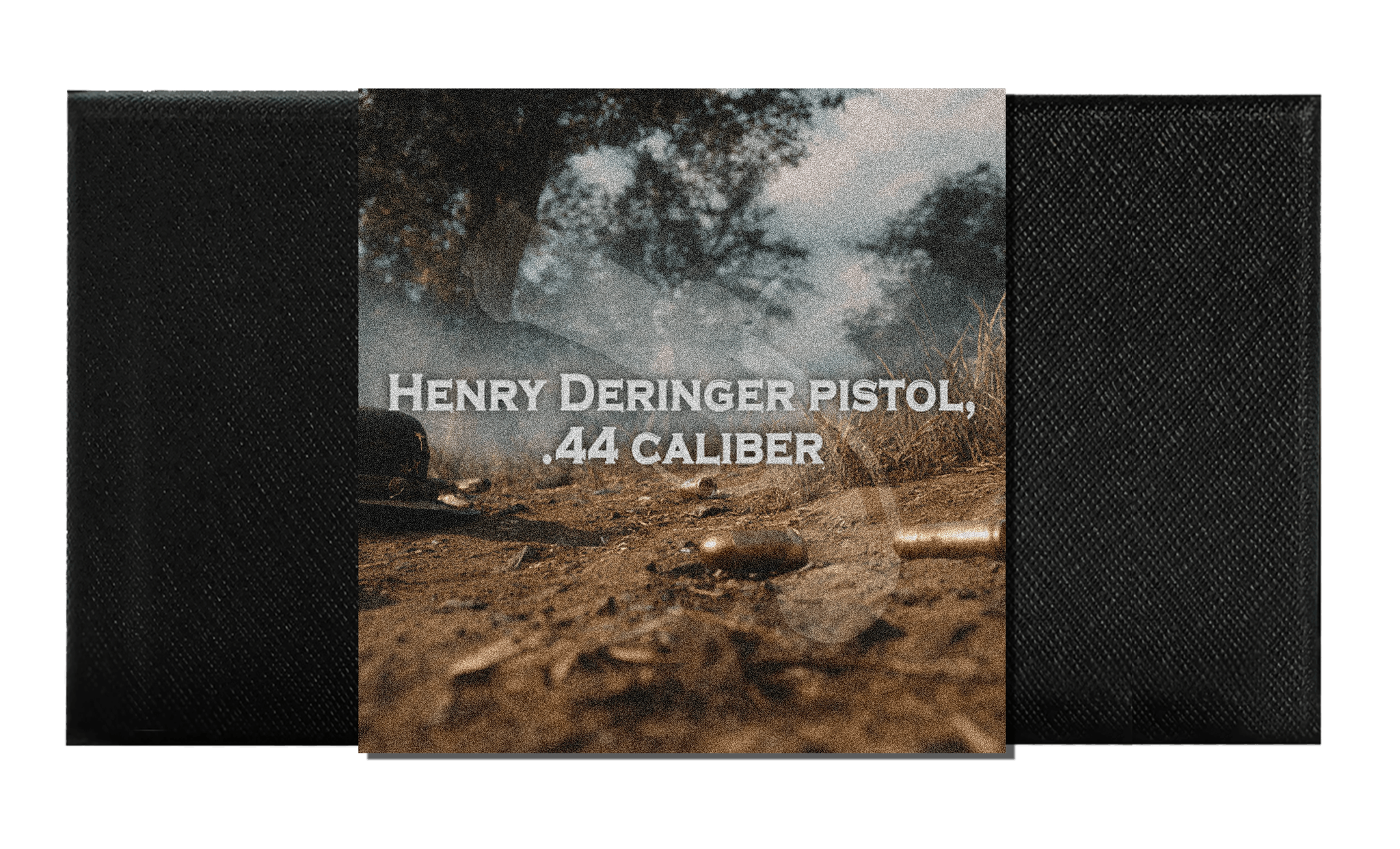
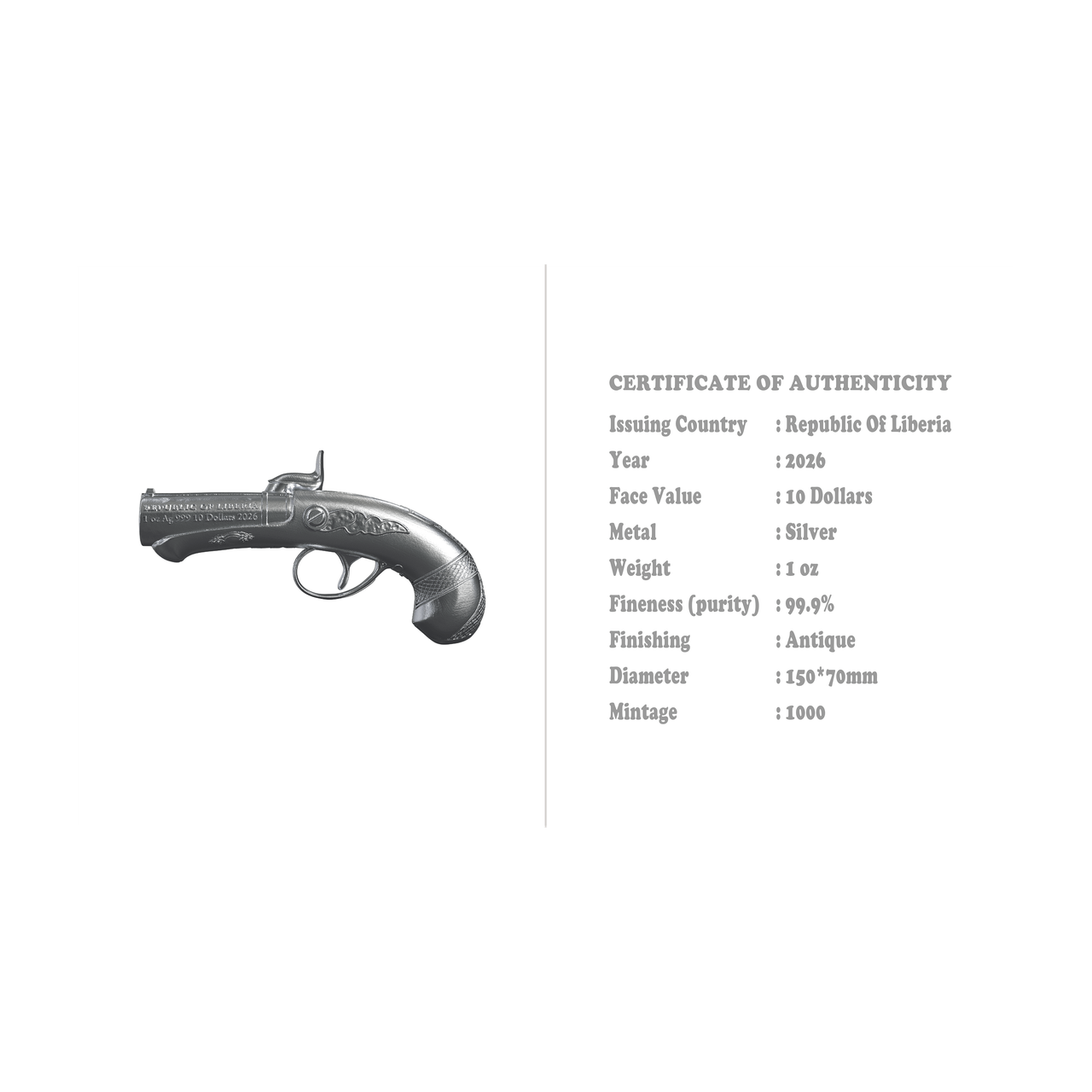
2026 Liberia Deringer Pistol Shaped 1 oz Silver
Presale: Expected Release Late Oct ‘26
The Deringer, an eerie piece of history.
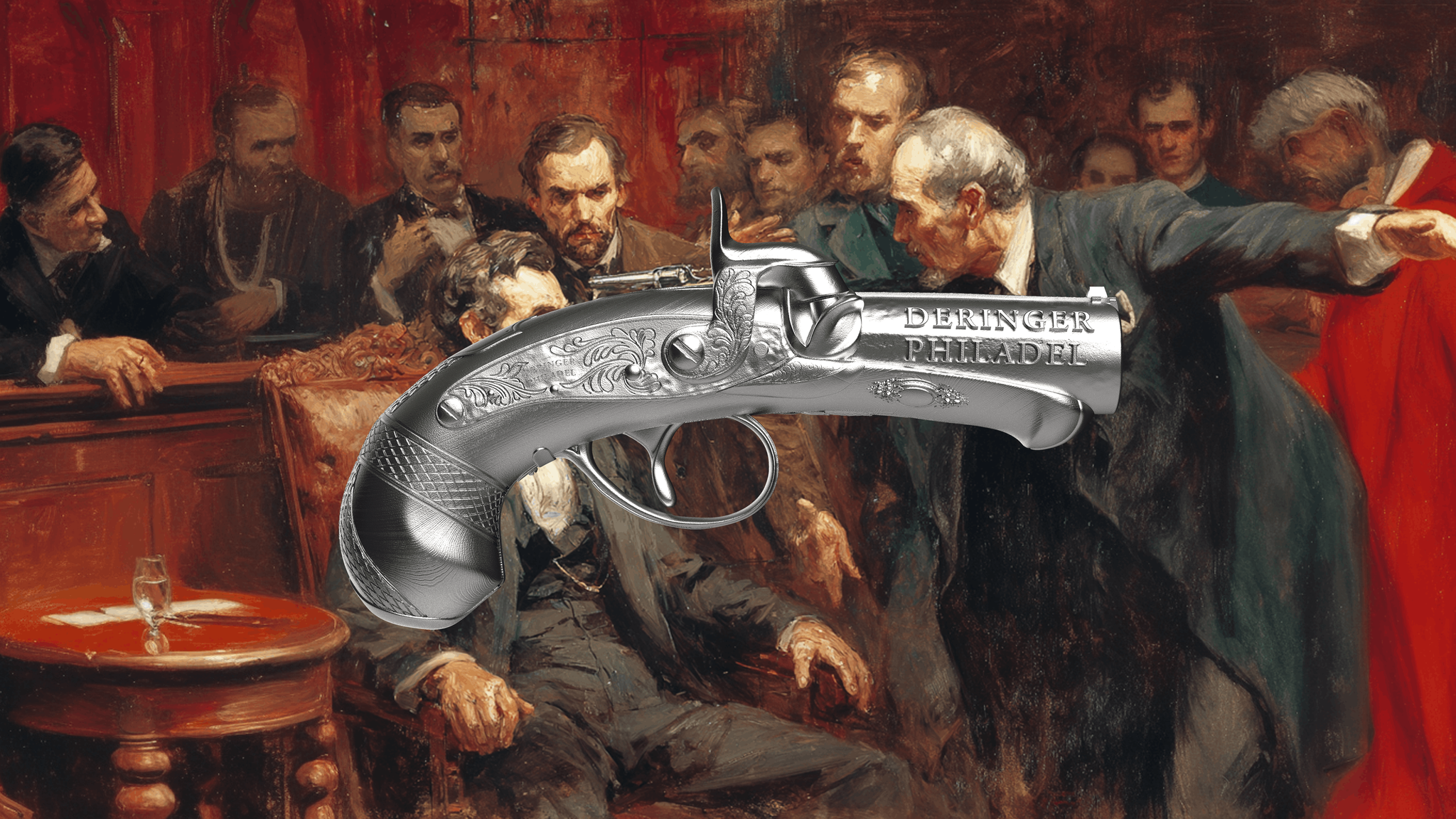
On the evening of April 14, 1865, in Ford’s Theatre, John Wilkes Booth assassinated President Abraham Lincoln with a Philadelphia Derringer — a small, single-shot percussion pocket pistol manufactured by Henry Deringer (commonly spelled “Derringer” in later usage). Here are the key facts and context about that weapon and the shooting:
Type and maker
A .41 caliber single-shot percussion pocket pistol attributed to Henry Deringer’s Philadelphia shop style. These pistols were compact, easily concealed, and popular in mid-19th-century America.
Characteristics
Short barrel (roughly 1.5–3 inches depending on model), single-shot muzzleloader, fixed iron sights, and a simple percussion-cap firing mechanism. Compact size made it ideal for covert use at close range but limited its accuracy at distance.
How it was used
Booth entered the presidential box and, at approximately 10:14 p.m., fired the derringer at point-blank range into the back of Lincoln’s head while the president was watching a play. The muzzle was reportedly within an inch or two of Lincoln’s head, ensuring fatal wound despite the pistol’s limited power.
Aftermath and physical evidence
Booth escaped the box by jumping onto the stage; in the scramble he broke his left fibula. He fled Washington, D.C., and was tracked down 12 days later. The derringer itself was recovered and became a key piece of evidence. Contemporaneous accounts and later examinations linked the pistol to Booth through witness testimony and its distinctive markings.
Historical significance
The small derringer’s use underscored how a tiny, easily hidden weapon could fatally change history. It also precipitated an intense manhunt and shaped security practices for public officials thereafter.
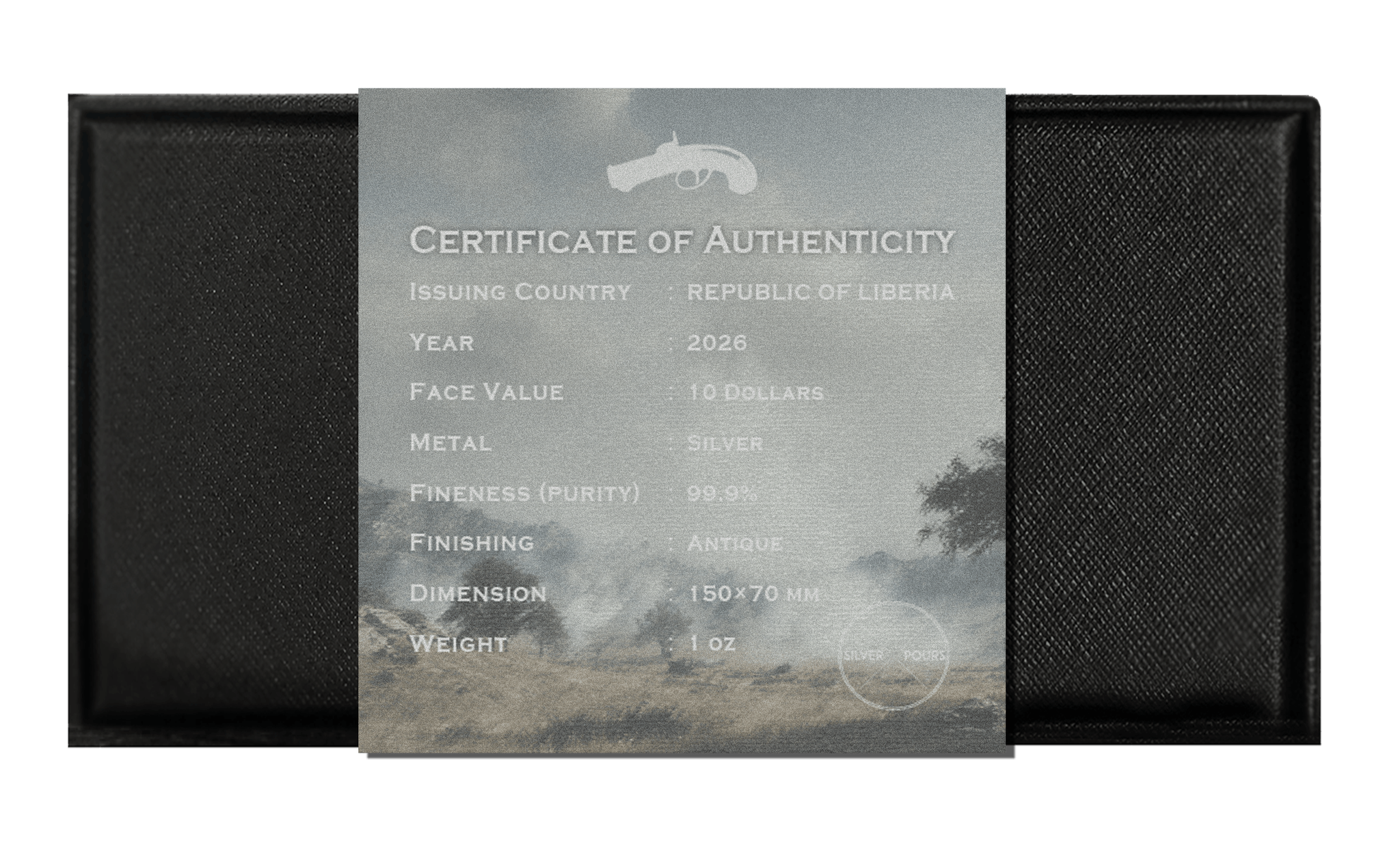
Mintage: 1,000
Denomination: $10
Purity: 999 Silver
Weight: 1 oz